
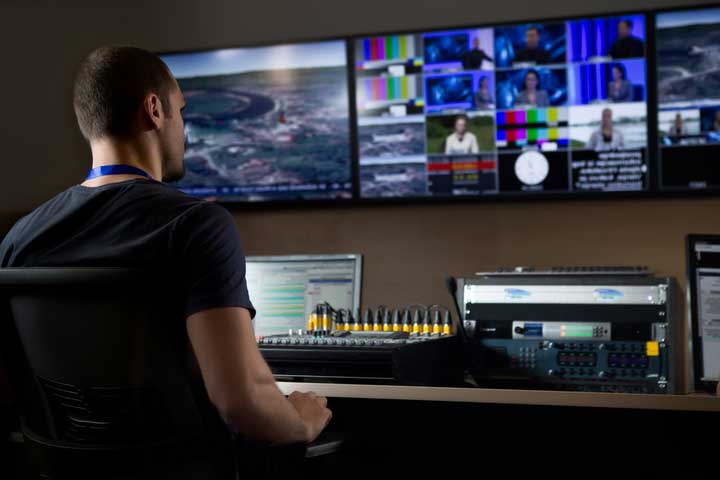
In the Post-Production stage, the filming and shooting are done and the editing process of the sound and visuals begins.
Post Production includes the most important tasks of filmmaking such as cutting raw footage, accumulating that footage, adding music, sound mix, dubbing, sound effects, and VFX just to mention a few.
A crew of expert professionals from different fields including editors, colorists, sound engineers, and foley artists ensure the Post-Production process goes smoothly.
The highly collaborative process of post-production takes a few months to even a year to get finalized depending on the various requirements of the project.
After the shooting is done, the first and foremost requirement is to secure all the footage in reliable storage. There are many options when choosing the best place to secure the footage which include a basic hard drive, a spinning hard drive, or RAIDs (a combination of hard drives).
Here begins the first step of the post-production stage:
- Selecting software for Editing
Choosing the best editing program is the most important step to be taken in the first place. One must be very careful while selecting the editing software as while the best one can help you more efficiently in maintaining workflow; the inappropriate one will result in unnecessary loss of time and money. The editing software must be chosen only after knowing the creative editor’s needs and the original format the film was shot on.
- Creative Film Editor
It is a really big decision to select the editor of the film. It is the creativity of the film editor that makes the proper creation of the film or movie. The Edit Decision List (EDL) is developed by the editor. The editor goes through all of the scripts and scenes of the movie and decides the sequence of the shots in order to create an engaging flow of the story.
- Creating Sound
Sound editing comes after the editing is done. The filmmaker must select the best sound editor who can spend a lot and lots of time and effort in the process. It is the sound editor who assembles and assorts the soundtracks of the film by getting rid of unwanted noise, cutting dialogue tracks, and elevating the movie with great sound effects.
ADR or Automated Dialog Replacement is another task that requires the expertise of the sound editor. If the sound wasn’t recorded properly on the set, the actors are asked to re-record the dialogue over the scene. This process is called Automated Dialog Replacement or ADR.
- VFX
Next is the step which includes Visual Effects or VFX. A VFX Supervisor with a creative crew of artists and other engineers creates miraculous visuals with computer-generated imagery or CGI. These visuals are impossible to film on the set. VFX is widely used for animation movies or unbelievable acts of war or scenes of homicides.
- Lower Third
The lower third is the effect widely seen in documentaries, news broadcasts, or interviews. Typically, the lower third refers to the text that’s added onto a shot placed in the lower third of the screen.
These titles are used to provide contextual information such as a character’s occupation, the name of a new location, or other bonus information related to the context.
- Color Correction and Color Grading
This is the process that comes after the VFX and the lower third is done. Color correction is the process of adjusting and fluctuating the color of the light with digital filters to match one another.
The color corrections include white balance issues, fixing exposure problems, and adjusting the light in every shot. Precisely, the Colorist polishes the final visual of the movie.